Smallholdings in East Dunbartonshire: Your Complete Guide
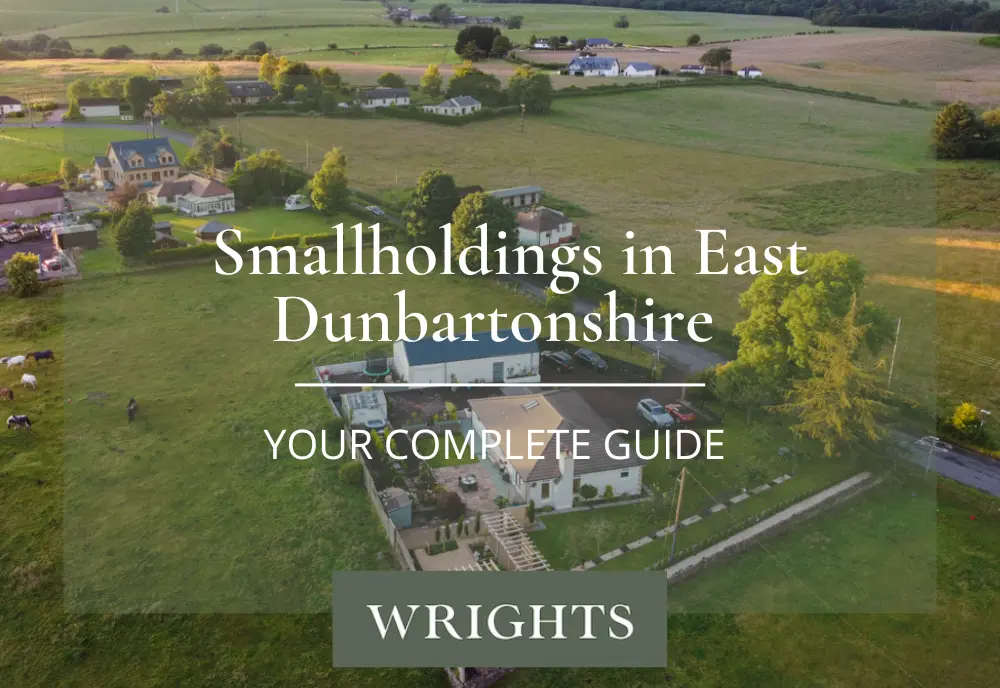
Smallholdings in East Dunbartonshire: Your Complete Guide
If the thought of a lifestyle business in idyllic surroundings, yet with easy access to highly rated schools, amenities, and leisure pursuits, appeals to you, then a smallholding in East Dunbartonshire may well be very high on your ideal property search list.
WHAT IS A SMALLHOLDING?
Generally understood as a property with under 50 acres of land, a smallholding is larger than a garden yet smaller than a farm. In practice, most smallholdings are considerably smaller than that upper limit, often somewhere between 1 and 10 acres, so there's no need to hold out for a huge plot. These homes can range from an allotment style plot to a mini farm, capable of growing crops and rearing livestock.
WHAT COULD I USE IT FOR?
Many purposes, most of which depend on whether you want to work full time and enjoy your smallholding in your leisure time, or have a "lifestyle business" that generates your full income. Lifestyle business opportunities could include: Growing fresh organic produce for local markets Renting out accommodation to holidaymakers Offering dog boarding or daycare Raising organically produced animals Providing stabling facilities for horses Or perhaps you would simply prefer to stable your own horse and produce just enough for your family's needs, in your very own version of The Good Life?
HOW DO I START MY SEARCH?
Defining what you would use it for is critical. For example, if you wish to grow crops, forested or steeply sloping land may not be suitable. If you want to save on existing livery fees, a fenced paddock and enough flat area for stabling and an arena may be what you need. If you need finance, speaking to a mortgage advisor is imperative. If your purchase already has an element of commercial use, you may need a specialist mortgage. It's also worth building a fuller picture of the property's practical setup before you commit. Many smallholdings come with a private water supply, a septic tank rather than mains drainage, or off-grid heating such as oil or biomass. These aren't a reason to be put off, but they are worth factoring into your due diligence and your insurance arrangements, as cover and costs can differ from a standard residential home.
WHERE DO I LOOK?
The postcodes within East Dunbartonshire with the highest concentration of smallholdings are:
G62 Milngavie
G66 Lenzie
G66 Milton of Campsie, Lennoxtown, and Clachan of Campsie
HOW DO I START WITH A SMALLHOLDING?
Depending on your budget, a home in move-in condition allows you to invest your cash straight into the outdoor areas, helping you start turning a profit more quickly. A house with potential could suit those with a smaller budget, allowing you to add value through renovation, with a re-mortgage on completion releasing funds to invest in your smallholding business. If you intend to keep livestock, you will need a CPH number (County Parish Holding number), sometimes also referred to as a "farm ticket."
WHAT NEXT?
If you have decided that the semi-rural or rural life is for you, get in touch with us here at Wrights on 0141 955 2105 or email hello@wrightsofcampsie.co.uk. Smallholdings are very much in demand, but we do regularly sell these throughout East Dunbartonshire and in neighbouring Stirlingshire. Registering with us means you will find out about any off market and on market smallholdings as they come up for sale.